
Why Is the Loneliness Epidemic So Hard to Cure?
Team Metabolic Health
In the early months of 2020, as the Covid-19 pandemic settled over the country, a psychologist and Harvard lecturer named Richard Weissbourd approached his colleagues with a concept for a new kind of study. Loneliness, or the specter of it, seemed to Weissbourd to be everywhere — in the solitude of quarantine, in the darkened windows of the buildings on campus, in the Zoom squares that had come to serve as his primary conduit to his students. Two years earlier, he read a study from Cigna, the insurance provider, showing that 46 percent of Americans felt sometimes or always alone. In 2019, when Cigna replicated the study, the number of lonely respondents had grown to 52 percent. God knows what the data would say now, Weissbourd thought.
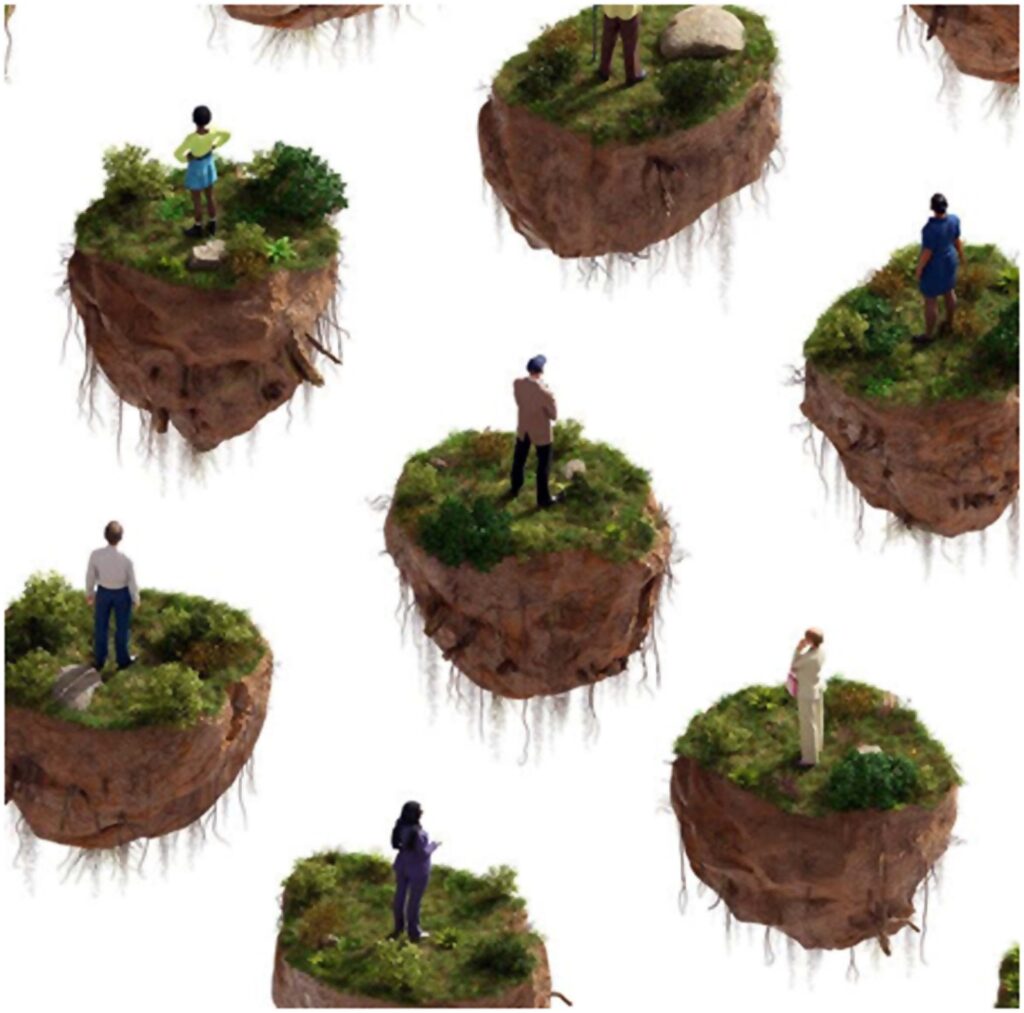
Credit: Illustration by Max Guther. Concept by Alex Merto.
“Initially, the idea was, OK, we’ve got a problem that’s not new but is obviously affecting lots of us, and that is now more visible than ever — it’s more present than ever,” Weissbourd told me. “What I really wanted was to get under the hood. Like, what does loneliness feel like to the lonely? What are the potential consequences? And what’s causing it?”
Finding answers to these types of questions is a notoriously difficult proposition. Loneliness is a compound or multidimensional emotion: It contains elements of sadness and anxiety, fear and heartache. The experience of it is inherently, intensely subjective, as any chronically lonely person can tell you. A clerk at a crowded grocery store can be wildly lonely, just as a wizened hermit living in a cave can weather solitude in perfect bliss. (If you want to infuriate an expert in loneliness, try confusing the word “isolation” with “loneliness.”) For convenience’ sake, most researchers still use the definition coined nearly three decades ago, in the early 1980s, by the social psychologists Daniel Perlman and Letitia Anne Peplau, who described loneliness as “a discrepancy between one’s desired and achieved levels of social relations.” Unfortunately, that definition is pretty subjective, too.
In order to understand the current crisis, Weissbourd, who serves as the faculty director of Making Caring Common — a Harvard Graduate School of Education project that collects and disseminates research on health and well-being — created a 66-question survey, which would be mailed to approximately 950 recipients around the United States. With the exception of a couple of straightforwardly phrased items — “In the past four weeks, how often have you felt lonely?” — a majority of the queries devised by Weissbourd and the project’s director of research and evaluation, Milena Batanova, approached the issue elliptically, from a variety of angles: “Do you feel like you reach out more to people than they reach out to you?” “Are there people in your life who ask you about your views on things that are important to you?” Or: “Has someone taken more than just a few minutes to ask how you are doing in a way that made you feel they genuinely cared?”
Several weeks later, the raw results were sent back to Weissbourd. “Frankly, I was knocked back,” he told me. “People were obviously really, really suffering,” and at a scale that dwarfed other findings on the topic. Thirty-six percent of the respondents reported feeling chronic loneliness in the previous month, with another 37 percent saying they experienced occasional or sporadic loneliness. As Weissbourd and Batanova had hoped, the answers to subsequent questions helped clarify why. Among the cohort identifying as lonely, 46 percent said they reached out to people more than people reached out to them. Nineteen percent said no one outside their family cared about them at all.
The struggle was particularly conspicuous in young respondents, ages 18 to 25, a sizable majority of whom reported acute feelings of loneliness in the previous month. Unsurprisingly, those subjects said, the pandemic had made them lonelier; in some cases, they had effectively withdrawn from a world that no longer had much meaning to them.
In February 2021, around the time Harvard announced its plans for the resumption of in-person classes, Making Caring Common published the results of the survey. “We have big holes in our social fabric,” Weissbourd said in a news release accompanying the paper, which he had titled “Loneliness in America.” Almost immediately, the emails and calls — from reporters, from other researchers and from lonely Americans who saw themselves reflected in the research — began pouring in. They did not stop arriving for several months. “My read was that the pandemic had exposed and turbocharged an existing problem,” Weissbourd told me. “Everything was being accelerated.” And it continued to accelerate, long after the world reopened: In March 2021, a quarter of adult respondents to a Gallup poll said they felt lonely for “a lot” of the day; that same month, the portion of young people dealing with the emotion on a regular basis was close to 40 percent. The Gallup numbers have since dropped somewhat, but not everyone has reaped the same benefits: The American Psychiatric Association says that 25 percent of U.S. residents are lonelier today than they were before the pandemic.
Last year, the U.S. surgeon general, Vivek Murthy, issued a 71-page advisory warning of an American “epidemic of loneliness and isolation,” with all the danger that classification implies. Murthy has estimated that a lack of social connection currently affects more Americans than, say, diabetes or obesity. Together with a concurrent decision by the World Health Organization to make loneliness a “global public health concern,” the surgeon general’s report has helped nudge the emotion into the same cultural position held by depression in the era of “Prozac Nation” and anxiety in the early aughts: a celebrity condition to be unpacked in an apparently endless cascade of front-page articles and self-help books (see: “A Practical Guide to Overcoming Loneliness” or “The Path Out of Loneliness”). There are now hundreds of podcast episodes devoted to loneliness, as well as a slew of start-ups like Belong Center, an anti-loneliness nonprofit.
Japan and Britain, where loneliness is as much a concern as it is in the United States, even appointed ministers of loneliness — government officials tasked with plumbing the depths of the crisis and ameliorating it, whether through public awareness campaigns (“Your hobbies and interests are important.”) or initiatives, like one in Britain, in which mail carriers were asked to check in with the elderly residents on their routes. Murthy, for his part, has suggested that entertainment companies might create more content that “reinforces the core values of connection.” Individuals, he adds, should consider “being a positive and constructive participant in political discourse and gatherings (e.g., town halls, school board meetings, local government hearings).”
What all these various efforts share, to one degree or another, is the idea that the solution to loneliness is only a phone call, or an email, or a text, or a friendly door knock away — that the key to closing the gap between perceived and realized levels of interpersonal relations, on a societal scale, is ultimately a matter of restoring a world that has slipped away from us. But at best, this sort of thinking reflects a misunderstanding of how we live now (and how we’ll live in the future). At worst, it serves as a distraction from the real issues. As research like Weissbourd and Batanova’s demonstrates, when we talk about loneliness, what we’re actually talking about are all the issues that swirl perilously underneath it: alienation and isolation, distrust and disconnection and above all, a sense that many of the institutions and traditions that once held us together are less available to us or no longer of interest. And to address those problems, you can’t just turn back the clock. You have to rethink the problem entirely — and the potential solutions too.

Credit: Illustration by Max Guther. Concept by Alex Merto.
Compared with other ailments of the mind, loneliness is a surprisingly modern concern: Although large segments of the world have probably always been anxious, have always been depressed, have always been wrathful, they were not always lonely in the specific (and negatively connoted) way contemporary experts understand the emotion today. In her 2019 book, “A Biography of Loneliness,” the historian Fay Bound Alberti goes so far as to argue that before the 1800s, practically no one in the Western world spent much time discussing loneliness at all.
Which is not the same as saying that no one was familiar with the word: It gets dropped in Shakespeare’s “All’s Well That Ends Well”; in Samuel Johnson’s dictionary (“disposition to solitude”); and in “Robinson Crusoe,” a novel published in 1719. Still, as Bound Alberti writes, in most pre-19th-century literature, “there was no emotional experience necessarily attached to solitude.” If anything, it was often nice to be alone. It was as good as a spa day. You try living in a single-room farmhouse with 14 members of your family. You would crave some isolation, too.
In the appendix to “A Biography of Loneliness,” Bound Alberti includes a graph depicting incidences of the word “loneliness” in a database of English-language works printed between 1550 and 2000. From 1550 to 1800, the line hovers somewhere between zero and 0.0001 percent. Then comes the 1820s, and the line charges vertiginously upward, like a mountaineer ascending a cliff. No mystery there. The world was changing, fast. War, mechanization, the rise of the metropolis, war again. Communities disintegrated — sometimes as a result of conflict and sometimes because the residents believed they could find better opportunities elsewhere. People moved out of small towns and into vast, anonymous cities. As they did, they sought a new etymology to explain the emotional cost; when we look at Bound Alberti’s graph, that’s very likely what we’re seeing.
In the 1950s, a small cohort of American scientists began grappling, for the first time, with the causes and effects of this new modern malady — in the process establishing what is today the growing field of loneliness studies. Among them was David Riesman, a sociologist who framed the emotion as being inextricably entangled with absence. Postwar America was prosperous, Riesman allowed, but prosperity had encouraged Americans to care about the wrong things. “Other-directedness,” he called it in his best-selling book, “The Lonely Crowd,” which he wrote with Nathan Glazer and Reuel Denney. Today we would call it FOMO: Americans were constantly peering over their neighbors’ fences, admiring the barbecue kit, the pool. When they failed to get those things for themselves, loneliness set in.
Others were inclined to see the emotion as something significantly scarier — a genuine medical syndrome, potentially widespread, on the level of depression or mania. “I am not talking here about the temporary aloneness of, for instance, a person who has to stay in bed with a cold on a pleasant Sunday afternoon while the rest of the family are enjoying the outdoors,” Frieda Fromm-Reichmann, a German-born psychiatrist, wrote in a groundbreaking paper called “Loneliness,” which was published posthumously in 1959. Nor was Fromm-Reichmann referring to wistful artistic solitude or the raw emotions that arise after the loss of a spouse. Her interest was in truly debilitating loneliness, of the type she observed in growing rates in her patients — loneliness that was “nonconstructive if not disintegrative” and that led to “the development of psychotic states. It renders people who suffer it emotionally paralyzed and helpless.”
But how? And why? What ultimately moved our understanding forward was the application of biological science. “Echocardiograms, brain-imaging technology, blood and urine tests. Using those, you could actually measure what was going on inside the body of a lonely person,” the psychologist Louise Hawkley told me recently. You could move past the anecdotal to the provable.
Hawkley has been researching loneliness for nearly 30 years — along with her mentor and friend, the late psychologist John Cacioppo, she has overseen or worked on nearly a hundred publications that illustrate, in often graphic detail, the physiological toll loneliness takes on the lonely. It is thanks to Cacioppo and Hawkley, for example, that we know loneliness raises our blood pressure, negatively alters our cognitive functions, is associated with Type 2 diabetes and shortens our life spans. (Subsequent studies have linked the emotion to suicidality, Alzheimer’s and leukemia.) When Vivek Murthy, in his 2023 advisory, writes that loneliness “is associated with a greater risk of cardiovascular disease, dementia, stroke, depression, anxiety,” he is largely referencing work done by Cacioppo and Hawkley.
In one of their most innovative experiments, designed to show that loneliness can cause poor health instead of merely correlating with it, they hired a hypnotist to coax a handful of test subjects into a state of heightened loneliness. Once it was induced, the subjects’ blood pressure and inflammation levels surged. “We could essentially manipulate the physiological condition by changing how lonely they felt,” Hawkley says. “And those same people, when they were made to feel not lonely” — when the hypnosis was reversed — “everything bounced back.”
In the mid-2000s, Hawkley and Cacioppo funneled their combined research to date into a framework that Hawkley described to me as a “sort of grand evolutionary theory of loneliness.”
The results, released nearly two decades ago in The Journal of Research in Personality, manage to get at the roots of our present-day predicament as incisively as anything I’ve encountered. In essence, Hawkley and Cacioppo argue, early Homo sapiens, outgunned by all manner of long-toothed beasts and without natural armor, achieved safety through community — they learned “to employ and detect deceit, and to communicate, work together and form alliances,” as the authors have it. Or the successful ones did, anyway. (The rest were eaten.) Gradually, our brains evolved to prioritize togetherness, and conversely, to generate an anxiety response when we failed to find it.
Imagine the warm sensation you feel on walking into a room full of friends. Now imagine being excluded by the same friends by a game of catch — an example from a study cited by Hawkley and Cacioppo. According to them, brain scans of the excluded participants demonstrated “neural activation localized in a dorsal portion of the anterior cingulate cortex that is implicated in the affective component of the pain response.” A mouthful, but you get the gist: To Hawkley and Cacioppo, the subjects’ pain was evidence that loneliness was a biological signal, not dissimilar to a rumbling stomach. “What hunger does for food, loneliness does for social relationships,” Hawkley told me. “It’s supposed to motivate us and tell us we need more people around us or that we need support. It tells us that something is wrong.”
In worst-case scenarios, loneliness becomes a self-fulfilling prophecy — a snare that tightens with each effort to shrug it off. What you sometimes see is the onset of a kind of feedback loop, Hawkley told me: A person desperately wants not to be lonely, but fear and anxiety have convinced them their loneliness reflects a fundamental undesirability. “They are absolutely certain that they’re not worth talking to, that no one likes them, that they’re not a good person and that it’s all their fault,” Hawkley says. “The brain is being hijacked.”
In 2021, Daniel Maitland, a psychologist and associate professor at the University of Missouri-Kansas City, devised an EKG-based pilot study in which he assembled a group of self-identified lonely people and asked them to participate in a series of relationship-building exercises. The moment the test subjects were asked to disclose something personal to their peers, the readings on the monitors strapped to their chests escalated, indicating that vulnerability was a major stressor on their nervous systems.
There are two ways to parse these results. The first is that Maitland’s subjects were lonely precisely because intimacy was naturally fraught for them. The second is that they were trapped in their own heads, in thrall to Hawkley’s feedback loop. For these subjects, advice about attending a local town hall or church basement bingo, however well meaning, would be likely to fall flat, partly because of the fear impulse it would engender. But partly, too, because that variety of community gathering feels so antique and unappealing to many of us — the relic of a bygone era.
In 2000, Robert Putnam, the Harvard political scientist, published “Bowling Alone,” a book that famously documented a steady erosion in membership of organizations and groups that once bound so many Americans together — granges and churches, unions and library reading circles, athletic clubs and neighborhood improvement associations. Nearly a quarter-century on, the trend lines identified by Putnam have not been reversed. If anything, they’ve grown more pronounced, as have the related data on household status and family: In 2024, American marriage rates are far lower than they were at the midcentury mark, while the number of one-person households in the country has more than tripled to 29 percent.
Needless to say, marriage doesn’t negate loneliness — plenty of bad or abusive marriages are chillingly sad for the people locked inside them — and a single-person home is not synonymous with a lonely one. Still, it’s impossible to look at the aggregate data from the 1950s onward, including a new survey by Gallup on weekly attendance of religious services, which sank last year to 21 percent of the U.S. population, and not feel that something has been lost.
“I’m not suggesting that we should become more religious, but I want to just suggest to you that religious communities are a place where adults engage kids, stand for moral values, engage kids in big moral questions, where there’s a fusion of a moral life and a spiritual life,” Weissbourd said at a talk held in March at the Harvard Kennedy School of Government.
“A sense that you have obligations to your ancestors and to your descendants, where there is a structure for dealing with grief and loss,” he went on, repeating his opening caveat. “I feel urgently like we have to figure out how to reproduce those aspects of religion in secular life.”
Earlier this year, Weissbourd and Batanova conducted a follow-up to their 2021 loneliness survey, adding an open-ended prompt in which lonely respondents could try to account for the presence of the emotion in their lives. Many subjects cited a lack of “meaningful connection” as the primary culprit. This was true whether or not human companionship was available to them. Physical proximity wasn’t always the issue. Emotional proximity usually was. Consider the young mother who frets that her existence has been reduced to caring for her baby, or the respondent who complains that his or her “partner is only interested in the phone.” A third subject admits to having plenty of family around but to being undervalued by them. “Am surrounded,” a fourth writes, by people “who only are present in my life because am useful.”
Work — the office — appears to be of little help. Fewer Americans are finding purpose and meaning in their careers, and the ones who do are laboring in a drastically altered landscape. Post-pandemic, office buildings in every major city remain empty; something like 22 million Americans now work from home, communicating with their colleagues through Zoom or Slack. Whether or not you believe that “virtual commuting” is good for productivity, it is demonstrably bad for community building. A July report by Jeffrey Hall, a professor of communication studies at the University of Kansas, and a team of researchers asked 4,300 Americans to talk about their social circle; most respondents said they had met their close friends through school or work. But the numbers were skewed by age: People 51 years or older were more than twice as likely to have met at least one close friend at work as people under 30. “Removing the social aspect of work further encourages remote workers to keep their jobs at arm’s length,” Hall wrote in The Wall Street Journal. “This detachment could have the twin effects of maintaining a better work-life balance but leave workers lonelier than they would be had they made office friends.”
The residue of the pandemic, for all of us, has proved difficult to scrub away. Studies have shown that we emerged from quarantine with less ability to make eye contact or conduct ordinary conversation with acquaintances. “The interactions that make us less lonely come naturally to us, but they still need to be practiced, or our skills atrophy,” Ian Marcus Corbin, a Harvard Medical School philosopher and senior fellow at Capita, which helped fund Weissbourd’s study, told me. “And in 2020 and 2021, a lot of people who were in a formative period of their lives saw those muscles atrophy.” Concurrently, the usage of “frictionless forms of interaction,” like self-checkout displays or meal-delivery apps, ballooned. Corbin sees these developments as evidence of “cocooning”: a retreat into a digital world that provides everything you need except the thing you need the most, which is the “meaningful connection” mourned by respondents to Weissbourd and Batanova’s survey.
When I spoke this year with Julianne Holt-Lunstad, a professor of psychology and neuroscience at Brigham Young University, she summed up the aggregate effects of these losses in a cascade of statistics she had apparently committed entirely to memory. “You look at the data from 2003 to 2020, and you see that time alone has gone up in America, while time spent with friends and family has gone way down. Time spent with others, companionship levels: It’s all down,” she said. “Then if you examine data from the national Crisis Text Line, which has information from 1.3 million texts, you see the No. 1 issue people are reporting has to do with relationships. One in three texts is related to relationship stress; one in five involves lack of human connection. In some cases, disconnection is happening due to feeling lonely. In some cases, a person is objectively isolated.” She added: “We may lack social support; we may have poor-quality relationships. It all signals that we’re not having our social needs met.”
Traditionally, the moments Americans have been most afflicted by loneliness have also been moments of major societal change: It is no accident that David Riesman wrote “The Lonely Crowd” in the age of TV dinners and white picket fences that separated one neighbor from the next. “There’s a cyclical nature to it,” says Eric Klinenberg, a sociologist at New York University and the author of “Going Solo: The Extraordinary Rise and Surprising Appeal of Living Alone.” “You look through the literature, and you can read anxiety about loneliness in the early 1900s, when everyone started listening to the radio. Or later, when we worried that cars would lead to us driving away from our families and neighborhoods in search of something new. You can read it in the ’60s and ’70s, with the sexual revolution and the rise in divorce rates. Throughout, loneliness is a ready-made discourse, right? It’s always there for us” — our go-to explanation for the recurring sensation that the culture is changing too fast and leaving us behind.
If the loneliness “epidemic” today feels uniquely profound, Klinenberg believes, it is only because the current dislocation is occurring at an unprecedented scale. “We’re the first people in the history of the earth to see the conditions of social life change in this way,” he says. “And they’ve changed dramatically.” Political dysfunction, global warming, a waterfall of mental health crises — and on top of it all, a transformation, in the internet, in the way we communicate.
The easiest way to respond to these dislocations, and to try to account for the loneliness they elicit, is to wish them away — to try to jam the genie back in the bottle. Weissbourd calls it a “palpable nostalgia for old modes of closeness,” and it’s everywhere in the responses to his and Batanova’s follow-up survey, from earlier this year, in which subjects were asked if Americans today are lonelier than they were in decades past and if so, why. “Previous generations,” one respondent writes, “weren’t as self-centered and helped each other more.” Another speaks of a time when individuals “lived in closer proximity” and “relied on family members to a greater extent.” “It took a community,” a third says, “to survive.”
This sentiment, too, colors many of the various proposed policy fixes, like Britain’s mail-carrier plan or the 2023 guidance from Murthy, who suggests near the end of his advisory that lonely individuals “reach out to a friend or family member” and that parents encourage their children to participate in structured, in-person activities “such as volunteering, sports, community activities and mentorship programs.” One implication is that shrinking the gap between realized and desired social relations, and thus conclusively ending the loneliness epidemic, will merely be a matter of recreating, in some sort of updated form, the types of community alive in an older era.
Unfortunately, history rarely works that way. “One big problem I have with the current rhetoric around loneliness is that we treat it as if it’s permanently going in only one direction,” Klinenberg told me. “It’s not. It’s a more interesting phenomenon than that” — and more nuanced. When loneliness gripped the Western world during the Industrial Revolution, everyone didn’t suddenly retreat to their ancestral villages; the radio didn’t make us permanently lonely. We built new communities in the city, far from our families; we used radio to expand our world and to talk to people on the other side of the country. We adapted. And as hard as it may be to accept, the path out of loneliness in 2024 lies almost certainly via a similar route — forward, forward.
There are signs that a similar mass evolution is already underway. Take the smartphone, a device that gets a lot of blame for our lack of physical connection and that has simultaneously led to other, but no less meaningful, forms of togetherness. “I wrote an entire book about online dating, and to give you one example, I know as much as anyone about how much it can suck to be on Tinder,” Klinenberg says. “I also know the internet is the main way people meet their spouses these days. I think about cases of people who have rare diseases and are able to share information and get better care and feel connected because the internet allows them to do so. I think about trans kids, who are at risk of distress because they feel so rejected and alone in some families and are now able to talk to people like them — to get messages that affirm them.”
None of which is to say we won’t still need physical togetherness — only that there may be less of it, and the physical togetherness that does persist may look different than it did for our ancestors. Ninety-six thousand Taylor Swift fans singing in sync, the thunder of a crowded football stadium and then a gazillion internet threads in which the attendees relive and post photos and remember the euphoria of their shared experience. A romance that exists partly in the real world and partly online, and in which emotional closeness is not diminished but enhanced by a steady stream of the sort of soul-baring disclosures that social media apps can facilitate.
There may be bumps, hurdles and obstacles, but as is the case with Cacioppo and Hawkley’s evolutionary theory, those bumps could be part of the learning process, the adaptation process. Part of the drive that forces us together.
Squint, and you can see it: a scenario in which the loneliness crisis today is really a mass period of acclimatization. It’s a bridge, an evolutionary step, during which we make our peace with certain trade-offs and realities — that in 2024, we’re not all going to race to rejoin the local grange. That we’re not all going back to church or temple or the mosque. That our kids may grow up far from their grandparents and aunts and uncles — far from the towns where we were raised. That the workplace will remain diffuse, tethered by Zoom meetings and the occasional in-person happy hour. That we may often see friends more on FaceTime than we do in real life. And most important, that despite it all, we’ll find one another again.
Credit: The New York Times Magazine
The Mosquito-Borne Virus Raising Alarms in the Northeast
Team Metabolic Health
Recent infections from the Eastern equine encephalitis virus are worrying health officials. Severe cases can be deadly or leave lasting injuries.
Residents of 10 communities in Massachusetts have been warned to stay indoors from dusk to dawn. Some local parks are closed at night. A person in New Hampshire has died. Pesticides are being sprayed from trucks and aircrafts.
What’s causing all of the alarm? A mosquito-borne virus called Eastern equine encephalitis, which is so rare that most infectious disease experts might never see a case. This year, at least four states have reported human E.E.E. infections.
Here’s what you should know:
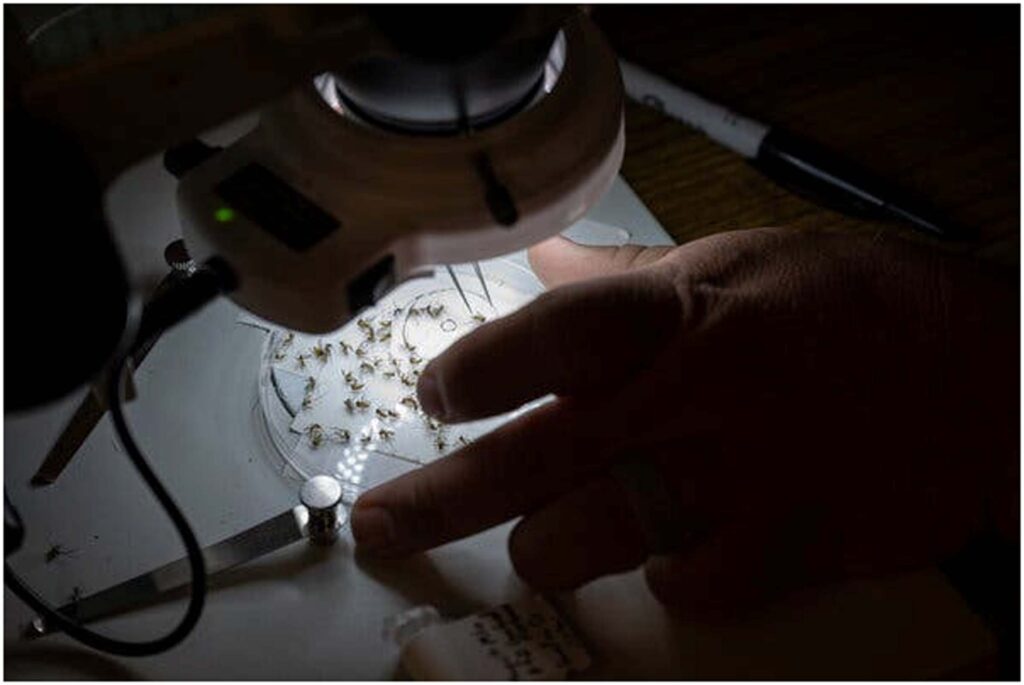
Experts say that anyone who spends extended periods of time outside and around mosquitoes is at higher risk of contracting Eastern equine encephalitis. Credit: Jon Cherry/Getty Images
Is this an unusually bad year for E.E.E.?
The virus is endemic in North America, which means that it’s consistently present on the continent. The United States sees a handful of infections every year, mainly along the East Coast and around the Great Lakes. In 2019, there were a record 38 cases, the largest U.S. outbreak in recent history.
As of Tuesday, the Centers for Disease Control and Prevention had reported four human cases, in Wisconsin, New Jersey, Massachusetts and Vermont. In addition, officials in New Hampshire have reported one death.
But experts say it’s too soon to know whether this will turn out to be a particularly severe year. Mosquito-borne illnesses usually spread widely until around October, or when it’s cold enough for water to freeze, said Dr. Jonathan Abraham, a clinical infectious disease specialist at Harvard Medical School.
Until then, health officials in the affected areas are urging residents to take precautions.
Who should worry?
The main risk factor for contracting the virus is exposure to mosquitoes, said Dr. Cameron Wolfe, a professor of infectious diseases at the Duke University School of Medicine.
Those who spend extended periods of time outside — including people who have outdoor jobs, who are homeless or who enjoy hiking or biking — are at higher risk of contracting the virus simply because they are more likely to be bitten by mosquitoes.
They should consider taking extra precautions, like wearing long pants and shirts and using bug spray. Notably, not all outdoor areas are equally risky.
Walking around in downtown Manhattan is probably much less risky, Dr. Wolfe said, than spending time outside in a swampy, lowland area of South Carolina, for example — the sort of environment that mosquitoes love.
Where does the virus circulate?
In the life cycle of the E.E.E. virus, humans are sort of an afterthought. In swampy ecosystems, mosquitoes feed on infected birds and then pass the virus on to healthy birds.
Some species of mosquitoes feed on both birds and larger animals. These are the biters that infect people. Humans cannot transmit the virus to other humans, and mosquitoes don’t usually become infected after biting humans because people don’t have high viral concentrations in their blood. That’s why humans are considered “dead-end hosts.”
So, too, are the other animals that may fall ill with the infection, like ostriches, llamas and, as the name suggests, horses. The E.E.E. virus was first identified in the 1930s using cultures of infected horse brains.
What’s the illness like?
Most people who are infected with the E.E.E. virus have no symptoms or have flulike symptoms that resolve within a few weeks, according to the C.D.C. But if the virus reaches the brain — which happens in less than 5 percent of cases — the prognosis becomes dire.
Once in the brain, the virus attaches to proteins on the surface of neurons and kills them, often causing lasting neurological damage. The body’s immune response, which leads to swelling and inflammation, may also injure the brain, said Dr. Kevin Gobeske, a critical care neurologist at the Yale School of Medicine.
About 30 percent of patients who develop neurological symptoms die, according to the C.D.C. Survivors may be left with severe, long-term conditions like paralysis, intellectual impairment and personality disorders.
Is there a treatment?
There are no treatments that target the E.E.E. virus, so doctors focus on managing symptoms with pain medications or, in severe cases, using steroids to control swelling. “We don’t have many good options,” Dr. Gobeske said.
It’s not clear why some people recover fully while others are hospitalized with E.E.E. infections. There is not enough evidence to say whether particular groups are at higher risk of severe illness, Dr. Abraham said.
While there are vaccines for horses, none are approved for humans. The disease is rare and complicated enough that there hasn’t been a push to develop a vaccine for people, Dr. Gobeske said.
The best preventive strategy is to limit exposure to mosquitoes by dumping out standing water, repairing damage to door or window screens and, in some high-risk areas, avoiding outside activities after dusk.
Even if E.E.E. has not been reported in your state, Dr. Wolfe recommends taking these precautions to help avoid all mosquito-borne illnesses, like West Nile virus, that peak around this time of year. Several states have reported cases of illness from West Nile, with the most notable being Dr. Anthony Fauci, who has hospitalized with it this month.
“I don’t know a good, healthy reason you should be happy about being bit by a mosquito,” he said. “It doesn’t matter if it’s malaria, dengue or Eastern equine — there’s no particularly good outcome.”
Credit: The New York Times
Power Of Meal Timing: Expert Explains How Chrono-Nutrition Can Transform Your Health
Team Metabolic Health
Chrono-nutrition is understanding meal timing in alignment with the body’s internal clock. Read on to learn how it affects your health.
Have you ever noticed how certain meals leave you feeling energised while others make you sluggish? It turns out that when you eat might be just as important as what you eat. This concept, known as chrono-nutrition, is about aligning your meal times with your body’s natural rhythms to maximise health benefits. We spoke to our expert Dr Rohini Patil, MBBS and Nutritionist Founder, Nutracy Lifestyle, who explained chrono-nutrition and how it affects your health.
Chrono-nutrition is the process of understanding meal timing in alignment with the body’s internal clock, or what’s called acircadian rhythm. The body has different physiological cycles regulating metabolism, hormone secretions, sleep, and wakeups, said Dr Patil. According to a 2023 study, Among the various dietary strategies, chrono-nutritive therapy, which is grounded in chronobiology, emphasises consuming the majority of calories and carbohydrates during lunch and the early afternoon, while avoiding late evening meals.
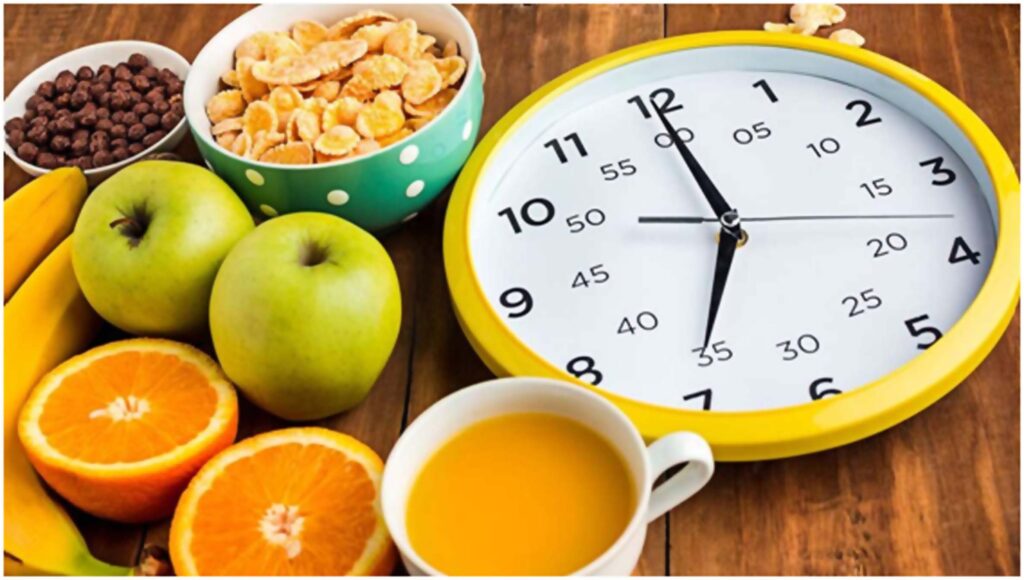
The Science of Meal Timing
Metabolism and Insulin Sensitivity
“Recent studies have shown that the body processes food at different rates during different times of the day. Sensitivity to insulin, for instance, appears to be maximal during the morning hours and decreases as the day progresses,” said Dr Patil.
This may imply that the bulk of carbohydrates should be taken in the morning to achieve better blood sugar control and reduce the chances of getting diabetes. If we eat late into the night when insulin sensitivity is very low, glucose metabolism will be impaired, leading to weight gain.
Weight Management
“Quite a few studies have directly linked late-night eating to weight gain and consequently to obesity. Eating large meals or high-calorie food before bed may disrupt circadian rhythms and change your body’s way of handling food,” added Dr Patil. Chrono-nutrition says the bulk of your daily calories earlier in the day are more in sync with natural metabolic swings and might help in more effective weight management.
Digestive Health
The digestive system operates on a circadian rhythm, just like other body systems. Eating at irregular times can disrupt digestion and lead to issues like acid reflux or indigestion. By adhering to regular meal times that align with the body’s rhythm, you can support healthy digestion and reduce the likelihood of experiencing these problems.
Sleep Quality
Meal timings can affect sleep patterns. Heavy meals or late-night snacks may cause discomfort while sleeping or, perhaps affect digestion that may lead to poor sleep. Finishing one’s meals at least 2-3 hours before bedtime may help improve the quality of sleep and overall rest one gets.
Practical Chrono-Nutrition Tips To Follow
- Start with a Good Breakfast: Kick-start your day with a well-done breakfast containing proteins, healthy fats, and whole grains.
- Eat at Perfect Intervals: Try to consume a heavier diet during the part of the day. This way, in theory, it follows your natural body cycle and should keep your metabolic efficiency at its best for weight maintenance.
- Stick to the same regular eating times: Metabolic health is maintained when meals are taken at the same time from day to day.
- Avoid eating late at night: Shun food after dinner as much as possible. If one needs to eat something, then the food should be light, and something easily digested.
- Listen to Your Body: Listen to how different eating times affect your energy, mood, and well-being overall. Adjust mealtimes based on your body’s cues.
Bottomline
Dr Patil concluded, “Chrono-nutrition suggests that more than the quality of food itself, meal timing can be important for health. Syncing your meals with your body’s circadian rhythm may enhance metabolic efficiency, improve weight management, support digestive health, and get better sleep.”
[Disclaimer: This article contains information provided by an expert and is for informational purposes only. Hence, we advise you to consult your own professional if you are dealing with any health issues to avoid complications.]
Credit: onlymyhealth.com
Tips for international students to deal with unique mental health challenges and resources they should know about
Team Metabolic Health
It is crucial for international students to understand and access mental health support in order to thrive academically and personally.
Navigating the challenges of studying abroad can be both exhilarating and daunting for international students. In addition to the excitement of experiencing a new culture and academic environment, many face significant mental health challenges, which are often worsened by isolation, financial constraints, cultural differences, and the pressure to succeed. It is crucial for international students to understand and access mental health support in order to thrive academically and personally.

Studies have shown that international students often report higher levels of stress and psychological distress compared to their domestic counterparts.(Unsplash)
The Unique Challenges Faced by International Students
International students often encounter stressors that differ from those faced by domestic students. These include difficulties in adjusting to a new cultural environment, being independent, language barriers, and a lack of familiar support systems. Additionally, many students experience acculturation stress as they struggle to adapt to a new learning environment, interact with students from various nationalities, and reconcile their own cultural values with those of the host country. This can lead to feelings of loneliness, anxiety, and depression. Studies have shown that international students often report higher levels of stress and psychological distress compared to their domestic counterparts.
One significant barrier to seeking help is being self-aware of the impact of these changes, which is furthered by the cultural stigma surrounding mental health in many countries. In some cultures, openly discussing mental health issues is not common, which can prevent students from seeking support. Additionally, the fear that mental health services may not be culturally sensitive or relatable can further discourage them from seeking help. Understanding these challenges is the first step toward providing adequate mental health support to international students.
Resources Available for Mental Health Support
Many universities recognize the unique challenges faced by international students and have developed specialized resources to support their mental well-being. These resources typically include:
On-Campus Counseling Services: Most universities offer tailored counseling services for international students. These services often provide culturally sensitive counseling and therapy sessions, which can be crucial for students who may feel more comfortable discussing their issues within a familiar cultural context. Additionally, some universities offer drop-in sessions and online therapy options to make it easier for students to access support.
Peer Support Programs: Many institutions have peer support programs where international students can connect with others from similar cultural backgrounds. These programs help reduce feelings of isolation and provide a sense of community. Mentorship programs, where upper-year students guide newer students, are also common and can be a valuable resource for navigating both academic and personal challenges.
Workshops and Support Groups: Universities often host workshops and support groups focusing on mental health, stress management, and cultural adjustment. These sessions provide practical tools and strategies for coping with the challenges of studying abroad and offer a space for students to share their experiences and learn from others.
Community and Off-Campus Resources: In addition to on-campus services, students can access mental health resources within the wider community. Local mental health centers, hotlines, and online platforms offer various services, including counseling, therapy, and crisis intervention. Some services are specifically designed for international students, with counselors who understand their unique challenges.
Tips for Managing Mental Health as an International Student
While accessing formal support is essential, students can also adopt several self-care strategies to manage their mental health effectively:
Stay Connected: Maintaining relationships with friends and family back home is vital. Regular communication can provide emotional support and help reduce feelings of homesickness. Building a social network in the host country can also foster a sense of belonging and alleviate loneliness.
Practice Self-Care: Prioritize self-care activities that promote well-being. This includes getting enough sleep, eating a balanced diet, exercising regularly, and taking time for relaxation and hobbies. Simple practices like journaling, meditating, or spending time outdoors can significantly impact mental health.
Set Realistic Expectations: Students should set realistic academic and personal goals. The pressure to excel in a foreign environment can be overwhelming, so students should be kind to themselves and recognize that it’s okay to struggle sometimes. Seeking help when needed is a sign of strength, not weakness.
Engage in Campus Life: Participating in campus activities, clubs, and organizations can help students integrate into the university community and build meaningful connections. Cultural exchange programs can also enhance students’ understanding of the host culture and reduce cultural shock.
Seek Help Early: If students notice signs of mental distress, such as persistent sadness, anxiety, or difficulty concentrating, it’s essential to seek help early.
Wrapping it up
The mental health of international students is a critical issue that requires attention from both universities and students themselves. By understanding the challenges, accessing available resources, and adopting effective self-care strategies, international students can successfully navigate their academic journey and enjoy a fulfilling experience abroad. Universities, in turn, must continue to develop and promote services that cater to the diverse needs of their international student population, ensuring that they feel supported and valued throughout their studies.
(Author Patriek Karayil is President of American Colleges, the international arm of the American Education Board. Views expressed are personal.)
Credit: Hindustan Times
Weight loss drugs cut Covid-19 deaths, study finds
Team Metabolic Health
People who were already being treated with a 2.4 mg dose of the drug semaglutide — the active ingredient in pharma titan Novo Nordisk’s Ozempic and Wegovy — could still contract Covid-19 but had a 33% lower chance of dying from the sickness, according to a crop of studies published by the Journal of the American College of Cardiology (JACC) on Friday.
The papers also indicate that semaglutide may have a wide range of health benefits beyond the previously identified reduction in risk of serious heart events such as heart attacks and strokes. In an interview published by JACC, paper co-author Benjamin Scirica said that patients who received semaglutide in his own study showed a 29% reduction in deaths from causes not linked to heart events, adding that weight did not appear to be a “major mediator” in the findings.
The large study, which preceded the pandemic and ran through it, was carried out on over 17,600 people who were overweight or obese and who suffered from heart illnesses, but not diabetes.
Other studies published by JACC on Friday showed semaglutide improved symptoms linked to heart failure, inflammation and a host of other functions, as well as reducing deaths among patients who suffer chronic kidney disease.
Key Points
- People taking the key component of blockbuster weight loss drugs Ozempic and Wegovy were less likely to die of Covid-19 or suffer adverse effects from the virus, researchers found in a new study.
- A crop of studies published by the Journal of the American College of Cardiology (JACC) on Friday indicate that semaglutide may have a wide range of health benefits beyond the previously identified reduction in risk of serious heart events such as heart attacks and strokes.
- People taking the key component of blockbuster weight loss drugs Ozempic and Wegovy were less likely to die of Covid-19 or suffer adverse effects from the virus, researchers found in a new study.
The findings will give a further boost to Ozempic-maker Novo Nordisk, whose value has been turbocharged by the popularity of semaglutide-based treatments. The pharmaceutical giant has risen up the ranks to become Europe’s most valuable company, amid intense competition globally in the weight loss sphere with the likes of the U.S.’s Eli Lilly and a host of other challengers.
The discovery of new benefits from semaglutide could open up the drug for further uses.
Discussing the Friday papers, Yale University School of Medicine Professor and JACC editor Harlan Krumholz said in a JACC interview, “I begin to think about the weight loss almost as a side effect, I mean these [drugs] are really promoting health.”
He added, “I was thinking mostly about cardiometabolic health… but there may be many mechanisms by which [semaglutide] is making us healthier, and in some ways this is suggesting it’s helping us to resist the adverse consequences of the pandemic.”
Krumholz nevertheless noted that further research into the impacts of semaglutide was required.
Not all side effects from weight loss drugs have been positive, with one study carried out by Harvard Medical School this year finding that such medication might be associated with an increased risk of a rare eye disease.
Credit: CNBC
Targeting metabolism could slow neurological decline, reverse progression of age-related diseases
Team Metabolic Health
There is a complex relationship between metabolism, stress and ageing. Ageing is a biological process that no one can avoid. Ideally, growing old should be a time to relax and enjoy the fruits of your labour. Ageing also has a darker side, however, often linked to disease.
Every second, your cells perform billions of biochemical reactions that fuel essential functions for life, forming a highly interconnected metabolic network. This network enables cells to grow, proliferate and repair themselves, and its disruption can drive the ageing process.
But does ageing cause metabolic decline, or does metabolic disruption accelerate ageing? Or both?

Pix Credit: Stella de Smit via Unsplash.
To address this chicken-or-egg question, you first need to understand how metabolic processes break down during ageing and disease. I am a scientist and researcher, and my lab focuses on exploring the complex relationship between metabolism, stress and ageing. Ultimately, we hope this work will provide strategies to promote healthier ageing and more vibrant lives.
Is there a link?
Ageing is the most significant risk factor for many of society’s most common diseases, including diabetes, cancer, cardiovascular disease and neurodegenerative disorders. A key factor behind the onset of these health issues is the disruption of cellular and metabolic homeostasis, or balance. Disrupting homeostasis destabilises the body’s internal environment, leading to imbalances that can trigger a cascade of health issues, including metabolic disorders, chronic diseases and impaired cellular functions that contribute to ageing and other serious conditions.
Disrupted metabolism is linked to many hallmarks of ageing cells, such as telomere shortening, which is damage to the protective ends of chromosomes, and genomic instability, the tendency to form genetic mutations.
A dysfunctional metabolism is also linked to poorly functioning mitochondria; cellular senescence, or when cells stop dividing; imbalances in gut microbes; and cells’ reduced ability to detect and respond to different nutrients.
Neurological disorders, such as Alzheimer’s disease, are prime examples of age-related conditions with a strong link between dysregulated metabolism and functional decline. For example, my research team previously discovered that in ageing mice, the ability of bone marrow cells to produce, store and use energy is suppressed due to increased activity from a protein that modulates inflammation. This energy-deficient state leads to an increase in inflammation that’s worsened by these ageing cells’ reliance on glucose as their main fuel source.
Experimentally inhibiting this protein in the bone marrow cells of ageing mice, however, revitalizes the cells’ ability to produce energy, reduces inflammation and improves plasticity of an area of the brain involved in memory. This finding suggests that some cognitive ageing could be reversed by reprogramming the glucose metabolism of bone marrow cells to restore immune functions.
Repurposing drugs
In our newly published research, my team and I discovered a new connection between disrupted glucose metabolism and neurodegenerative disease. This led us to identify a drug originally designed for cancer that could potentially be used to treat Alzheimer’s.
We focused on an enzyme called IDO1 that plays a critical role in the first step of breaking down amino acid tryptophan. This pathway produces a key compound called kynurenine, which fuels additional energy pathways and inflammatory responses. However, excessive kynurenine can have detrimental effects, including increasing the risk of developing Alzheimer’s.
IDO1 is a key player in brain cell metabolism. Credit: Goultard59, CC BY-SA 4.0, via Wikimedia Commons.
We found that inhibiting IDO1 can recover memory and brain function in a range of preclinical models, including in cell cultures and mice. To understand why, we looked at the metabolism of brain cells. The brain is one of the most glucose-dependent tissues in the body. An inability to properly use glucose to fuel critical brain processes can lead to metabolic and cognitive decline.
High levels of IDO1 reduce glucose metabolism by producing excess kynurenine. So IDO1 inhibitors – originally designed to treat cancers such as melanoma, leukemia and breast cancer – could be repurposed to reduce kynurenine and improve brain function.
Using a range of lab models, including mice and cells from Alzheimer’s patients, we also found that IDO1 inhibitors can restore glucose metabolism in brain cells. Furthermore, we were able to restore glucose metabolism in mice with both amyloid and tau accumulation – abnormal proteins involved in many neurodegenerative disorders – by blocking IDO1. We believe repurposing these inhibitors could be beneficial across various neurodegenerative disorders.
Healthier cognitive ageing
The effects of neurological disorders and metabolic decline weigh heavily on individuals, families and the economy.
While many scientists have focused on targeting the downstream effects of these diseases, such as managing symptoms and slowing progression, treating these diseases earlier can improve cognition with aging. Our findings suggest that targeting metabolism has the potential to not only slow neurological decline but also to reverse the progression of neurodegenerative diseases such as Alzheimer’s, Parkinson’s and dementia.
Discovering new insights at the intersection of stress, metabolism and aging can pave the way for healthier aging. More research can improve our understanding of how metabolism affects stress responses and cellular balance throughout life.
Melanie R McReynolds is Assistant Professor of Biochemistry, Penn State.
Credit: The Conversation
5 supplements a doctor who says he’s reversed his age by 20 years takes every day
Team Metabolic Health
Dr. Michael Roizen is 78 but claims his biological age is 57.6.
Roizen, who has written about longevity, takes supplements every day.
A doctor who is 78 but claims he has a biological age of 57.6 shared five of the supplements he takes daily.
As life expectancy has grown — the average American is expected to live until 77.5, up from 70.8 in 1970 — so has interest in staying healthy for longer.
Dr. Michael Roizen, an anesthesiologist and the chief wellness officer at Cleveland Clinic whose books include “The Great Age Reboot,” told Business Insider how he exercises and eats to age healthily.
Although dietitians advise people to get their nutrients from food where possible, he also hopes taking the following five supplements will help boost his longevity.
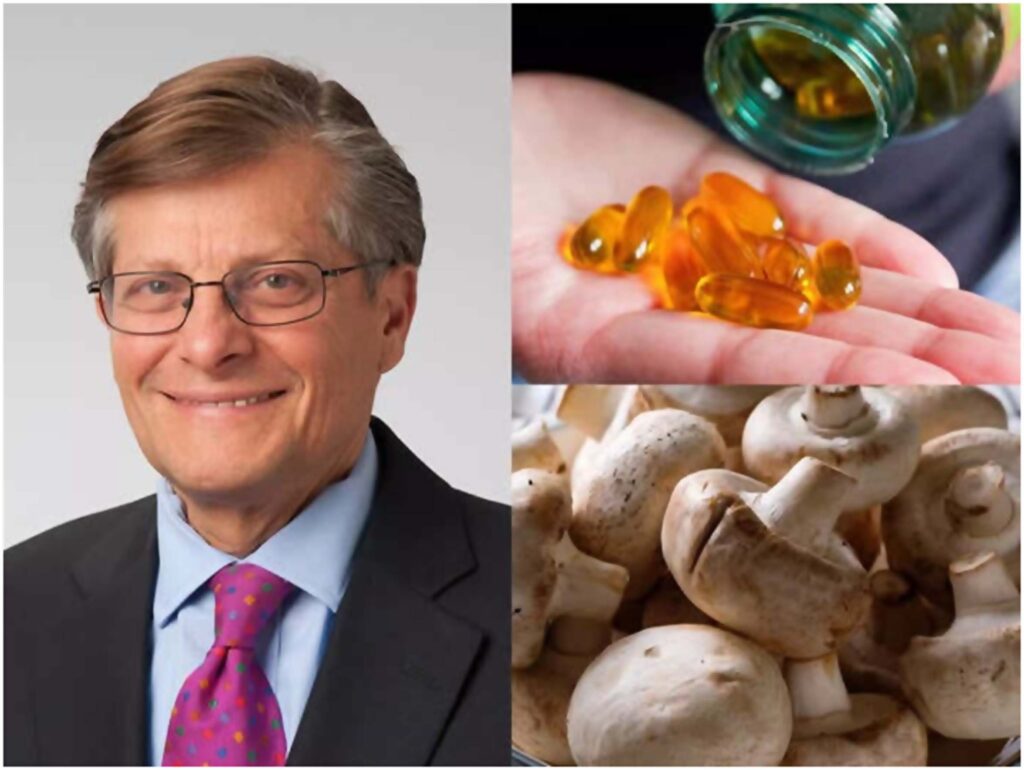
Dr. Michael Roizen shared some of the supplements he takes every day. Dr. Michael Roizen/Getty
Multivitamins
Roizen takes half a multivitamin twice a day. Although his approach hasn’t been proven in clinical trials, he believes it will keep vitamin levels in the blood as stable as possible, as most of a water-soluble multivitamin is peed out.
Roizen said evidence suggests multivitamins could lower the risk of dementia and cancer. Indeed, a 2022 study by researchers at Columbia University and Brigham and Women’s Hospital found that taking a multivitamin daily for three years appeared to improve older adults’ cognition and memory, although it was unclear why.
In participants with cardiovascular disease, a risk factor for cognitive decline, the authors said the micronutrients may have treated deficiencies linked to the condition.
However, the jury is still out on multivitamins. A 2022 review of studies by the US Preventive Services Task Force found no evidence that they prevent cardiovascular disease or cancer. In June, a study on 390,124 US adults by researchers at the National Cancer Institute found no evidence that they boosted longevity.
Dr. Roizen takes a multivitamin every day. (MStudioImages/Getty Images)
‘Baby’ aspirin
Roizen takes a low dose of aspirin (usually 81 milligrams), sometimes known as “baby aspirin,” twice a day in the hope it will prevent heart attacks and strokes. Taking aspirin regularly long-term carries risks because it can thin the blood so that the body can’t form clots when bleeding.
But Roizen believes it is safe for him to take as “someone over the age of 50 with a low risk of bleeding.”
However, the US Preventive Services Task Force does not recommend adults over 60 take preventive aspirin.
CoQ10
CoQ10 is a substance found in cells that helps convert food into energy. As an antioxidant, it has been linked to a reduction in the effects of aging on the skin and on a cellular level in humans and rodents. It’s also thought to prevent problems associated with free radicals, which are DNA-damaging particles that move around the body.
Roizen said he takes the supplement alongside statins to reduce his cholesterol levels, because statins decrease CoQ10 levels in the body.
However, a small 2022 study involving 37 participants published in Antioxidants found that the supplement didn’t the amount of CoQ10 in their muscles, where pain can occur in people who take statins.
And, according to the National Center for Complementary and Integrative Health, there isn’t strong evidence that CoQ10 improves blood pressure and heart failure despite some claims.
ASU
ASU stands for avocado-soybean unsaponifiables, which are vegetable extracts leftover from soap-making.
Roizen takes it to decrease the pain of osteoarthritis. There some evidence to suggest that ASU could treat osteoarthritis because of its anti-inflammatory properties. However, researchers say more long-term studies in humans are needed.
Ergothioneine
Ergothioneine is present in most foods, but mushrooms are particularly rich in it. Roizen doesn’t take an ergothioneine supplement but regards the substance as a supplement to his diet.
Instead of taking a pill, he gets it from mushrooms. Five days a week, he has an “MLT” — a mushroom, lettuce, and tomato sandwich — for lunch.
Eating plenty of ergothioneine as part of a healthy diet was linked to a lower risk of coronary artery disease in a 2020 study by researchers from Lund University, Sweden.
Meanwhile, studies on cells suggest that ergothioneine can help prevent DNA damage from UV exposure, according to a 2022 review of studies published in the journal Antioxidants & Redox Signaling.
Credit: Business Insider
Biocon shares gain after arm gets multiple USFDA approval
Team Metabolic Health
Biocon share price rose in the early trade on after the company’s arm received multiple approval from the US Food and Drug Administration (USFDA). At 09:28am, Biocon was quoting at Rs 360.50, up Rs 1.20, or 0.33 percent, on the BSE.

Pix Credit: Money Control
Biocon Pharma, a wholly owned subsidiary of the company, has received approval of its ANDA for Sacubitril/Valsartan Tablets, in 24 mg/26 mg, 49 mg/51 mg and 97 mg/103 mg strengths, from the USFDA. This combination medication is used to treat chronic heart failure in adults and to reduce the risk of death and hospitalization, as well as to treat pediatric patients over the age of one year. The said subsidiary has also received approval of its ANDA for Daptomycin for injection (500mg vial), from the USFDA.
Credit: www.moneycontrol.com
Why Good Sleep Habits Are Important For Adults With Overweight, Obesity
Team Metabolic Health
A study in overweight individuals concludes that misaligned body clocks are associated with raised metabolic risk factors. The findings show these metabolic changes vary between males and females. Realigning the body clock with sufficient sleep could help reduce the negative health implications of overweight and obesity, researchers say.
Circadian rhythms are 24-hour cycles that the body goes through each day — an internal “body clock.” These cycles include fluctuations in levels of hormones and neurotransmitters and drive the daily sleep-wake cycle. A recent study from researchers at Oregon Health & Science University (OHSU) shows that people with overweight or obesity whose circadian rhythms are poorly aligned may experience negative metabolic effects.
A study in people with overweight and obesity found that misaligned circadian rhythms are linked to raised metabolic risk factors. skaman306/Getty Images
The findings, published August 20 in The Journal of Clinical Endocrinology & Metabolism, suggest these negative effects vary significantly between males and females.
Readjusting the body clock could potentially reduce some of the risks associated with overweight and obesity, researchers say, although more evidence is needed to determine these effects.
How does overweight or obesity affect sleep?
Scientists have known for many years that getting enough good quality sleep is essential for good health. However, many people in our modern society are getting fewer hours of shuteye than ever. Research has also shown a close relationship between inadequate sleep and weight gain. For instance, the authors of a review on the subject concluded that short sleep duration was significantly associated with the risk of developing obesity in the future, but that long sleep duration was not. Research also suggestsTrusted Source that circadian misalignment may be linked to increased energy intake and obesity riskTrusted Source. Jacob Teitelbaum, MD, a board-certified internist and expert in chronic fatigue syndrome, fibromyalgia, sleep, and pain, explained why circadian rhythms are so important.
“The circadian rhythm is the critical ‘orchestra conductor’ for your body,” he told Healthline. “It regulates the proper timing of your hormonal and immune systems, and numerous other functions.” Teitelbaum was not involved in this study.
Studies have shown that circadian misalignment — which could mean feeling awake while the internal body clock is promoting sleep or eating when the body should be sleeping — is associated with less energy expenditure during the day.
In other words, people in this misaligned state burn fewer calories. Not sleeping enough is also linked to consuming more calories throughout the following day.
The relationship is complex, though, and researchers are still trying to understand precisely how body clock misalignment and insufficient sleep impact metabolic health.
What’s the relationship between circadian rhythm and obesity?
In the latest study, the scientists recruited 15 females and 15 males, all with overweight. They measured their body composition and took blood samples.
They also assessed their dim-light melatonin onset (DLMO). Melatonin is an important hormone that helps maintain circadian rhythms. As the day draws to a close and light levels fall, the brain produces melatonin. As levels increase, the individual becomes increasingly sleepy.
DLMO measures when melatonin release begins in dimly-lit conditions. Because melatonin release is a sign that the body clock is preparing an individual for sleep, scientists use DLMO as a marker of circadian rhythm phase.
By measuring the time difference between melatonin beginning to rise and the participant going to sleep, the researchers gauged the level of circadian rhythm misalignment.
Study co-author Brooke Shafer, PhD, a postdoctoral researcher with the Sleep, Health, & Chronobiology Laboratory at OHSU Portland Campus School of Nursing explained why this is important:
“Your body has a time that it starts to signal the brain to fall asleep, and if we try to sleep really close to that time, we may have trouble sleeping or have a lower quality sleep,” Shafer told Healthline.
Following the week-long study, the researchers identified sex-specific effects of body clock misalignment.
- Misaligned males had:
- Higher levels of abdominal fat
- Higher levels of blood fat (triglycerides)
- A greater risk of metabolic syndrome
- Misaligned females had:
- A higher percentage of overall body fat.
- Higher blood sugar levels.
- A higher resting heart rate.
Shafer shared that she was surprised by the sex differences. “These findings really emphasize that there is no one-size-fits-all approach to maintaining healthy behaviors,” she said.
In particular, she explained, “the sex-specific differences in how sleep habits affected glucose and triglyceride levels were quite notable.”
This is important because individuals who have high levels of blood fat or blood sugar have an increased risk of heart disease.
These findings suggest that “circadian disruption may not only promote a trajectory of weight gain but could also contribute to negative health consequences in a sex-dependent manner in those already with overweight/obesity,” the study authors wrote.
The researchers hope that optimizing circadian alignment could help reduce the risk of poorer health outcomes, particularly in people with overweight or obesity.
Shafer said the team will continue to study the impact of circadian rhythm misalignment.
“Our next steps are to look at sex-specific differences in health markers for individuals who are vulnerable to extreme sleep disturbances, such as those who work during nighttime hours,” she said.
How to realign circadian rhythm
The current study is small-scale, so scientists need to carry out more work to confirm the results. However, a number of studies have shown that a misaligned body clock is linked to negative health outcomes.
The good news is that most people can readjust their body clock with good sleep habits.
This could mean that an individual with overweight might be able to reduce their risk of metabolic diseases by working to realign their circadian rhythms. However, trying to maintain a healthy weight should still be the primary goal.
Chelsea Perry, PhD, owner of Sleep Solutions in Westborough, MA, not involved in the study, and member of the American Academy of Sleep Medicine, suggested the following tips to for getting your internal body clock back on track:
- Maintain a consistent sleep schedule, even on weekends.
- Get exposure to natural light, especially in the morning.
- Limit screen time and bright lights in the evening. This helps signal to your body that it is time to wind down.
- Gradually adjust your bedtime and wake time by 15–30 minutes each day to help ease your body back into its natural rhythm.
Cherilyn Davis, MD, a board-certified pediatrician with Elliston Pediatrics, likewise not involved in the study, offered additional tips to optimize sleep:
Avoid things that may disrupt sleep, like drinking caffeinated drinks before bedtime.
Make your sleeping space comfortable, cool, and dark.
Avoid napping or exercising late in the day, as this may make you less tired at night and disrupt circadian rhythm.
Takeaway
A new study concludes that people with overweight and have a misaligned body clock may be at a greater risk of metabolic disease. Conversely, the authors hope that realigning circadian rhythms might help reduce these risks.
Credit: healthline.com
Healthy diet lowers risk of dementia: study
Team Metabolic Health
We know that food is fuel for our bodies, but what foods make the best fuel for our brains?
“The foods that we eat, we think, ‘OK, we break those foods down and that turns into energy.’ Well, it’s a little bit more complicated than that,” said Tegan Mansouri, clinical assistant professor at the University at Buffalo School of Public Health.
According to a recent study published in the JAMA Network Open journal, the correct answer is foods that are anti-inflammatory.
What You Need To Know
A study published in the JAMA Network Open journal found that eating a diet of anti-inflammatory foods can help lower the risk of dementia by 31%.
The study looked at the diets of people with cardio metabolic diseases such as type 2 diabetes or high blood pressure.
The study also found that for those with cardio metabolic diseases who had an anti-inflammatory diet, it also contributed to two more years of life before onset of dementia.
“Anti-inflammatory foods [like] fruits, vegetables and also foods high in fiber like whole grains, those types of foods contribute to reducing the inflammation in our body,” Mansouri said. “And we know that inflammation is associated with decreased grey matter, decreased white matter and overall increased cognitive decline.”
The study looked at the diets of people with cardio metabolic diseases such as type 2 diabetes or high blood pressure.
“What they found was that even those who had already been diagnosed with cardiometabolic disease, they were able to get the benefits of that anti-inflammatory diet that reduced their risk of dementia by 31%,” said Mansouri.
Meaning whole foods like fruits, veggies and whole grains help reduce the overall inflammation throughout our body.
“The more we incorporate that in our diet, the less we’re consuming foods that don’t have as much nutrient density,” said Mansouri.
But it doesn’t mean that eating healthy has to be all work and no play.
“It’s so much less that eating a bowl of ice cream is going to cause inflammation and it’s so much more about the overall balance of the diet,” Mansouri said.
Credit: Spectrum News
Indians are not consuming enough micronutrients: Lancet study
Team Metabolic Health

Pix Credit: Wion News
Across the world, there are over five billion people whose diets do not include iodine, vitamin E, and calcium. Indians across all age groups are believed to be deficient in iron, calcium, and folate, which are essential for health, because of inadequate consumption of micronutrients, according to a recent study. According to a study published in The Lancet Global Health journal, people in India are not consuming a proper nutritional diet which is said to be resulting in micronutrient deficiencies. Micronutrients, which include vitamins and minerals, play a significant role in maintaining proper bodily functions. They are essential in smaller amounts like fats and carbohydrates are vital components for good health.
Credit: Wion News
5 ChatGPT Prompts To Identify Bad Clients Before You Work With Them
Team Metabolic Health
5 ChatGPT prompts to identify bad clients before you work with them
What if you could spot problematic clients before they derail your projects and cost your peace of mind? What if you could transform your client selection process to guarantee mutually beneficial partnerships? What if you only worked with awesome clients, who understood your value and were grateful for your work? It’s all possible.
Not everyone is your client. And letting everyone in is a false economy. Change how you filter to transform your business and disposition.
Chris Do is founder and CEO of The Futur, a business school for creatives, providing coursework, community and online coaching to help creative entrepreneurs succeed. Do is an Emmy award-winning designer, content creator and podcast host, and has run a design business for 22 years. He’s on a mission to teach 1 billion people to make a living doing what they love, and with books, courses, and a YouTube channel with over 2 million subscribers, he’s doing just that. Do believes that asking the right questions can help creative professionals avoid nightmare client situations and set the stage for successful collaborations.

Combining Do’s teaching on client relationships with powerful prompts led to 5 ChatGPT prompts to identify potential client issues before they arise. The prompts were designed and tested by Prompt Entrepreneur Kyle Balmer, an international trainer in AI for business and entrepreneurship with 50,000 newsletter readers and 25,000 students of his prompt engineer courses.
Use these ChatGPT prompts to improve your client screening process and set the foundation for successful projects. Copy, paste and edit the square brackets in ChatGPT, and keep the same chat window open so the context carries through.
Protect your business: detect difficult clients early with 5 ChatGPT prompts
Uncover the gap between desire and results
Unhappy clients make bad clients. And unhappiness comes from the difference between expectation and results. “I’m always looking for a gap. I’m looking for a problem to solve,” explains Do.
The problem might not be them, it might be you. Understand the disconnect between what clients want and what they’re currently getting to reveal potential challenges and opportunities. If a relationship started off great and then it turned bad, figure out what went wrong and make sure what you’re delivering is up to scratch. Your service can always improve. Here’s Balmer’s prompt.
“You are a business analyst specializing in identifying gaps between client goals and current results. Based on this initial client statement [insert potential client’s description of their needs], identify potential gaps between their desired outcomes and current situation, [add details of their desires and realities], and suggest three probing questions to better understand these gaps, as well as possible red flags (theirs or ours) that might indicate unrealistic expectations or misalignment.”
Explore the client’s future vision
Travel forward in time with your client to understand what success looks like from their point of view. Are they unrealistic from the start, or can you ultimately satisfy their needs? Chris Do recommends you ask your potential client this question to gauge their clarity and commitment: “If we were having this discussion 3 years from today and you were looking back over those 3 years, what has to have happened in your life both personally and professionally for you to feel happy with your progress working with us?”
Ask every client this question to see if you’re up to the challenge of working with them. Get help assessing their response with this prompt.
“You are an expert in analyzing responses to the question I ask potential clients before working with them: “If we were having this discussion 3 years from today and you were looking back over those 3 years, what has to have happened in your life both personally and professionally for you to feel happy with your progress working with us?” Based on this client response [insert client’s answer to the 3-year question], evaluate the clarity of their vision, and potential misalignments between their goals and my services, [describe your services].”
Assess the client’s willingness to change
“Everyone wants to be a bodybuilder, but nobody wants to lift no heavy-ass weights,” said Ronnie Coleman. “Everybody wants different results, but they don’t want to do anything different,” said Chris Do.
If you’re willing to put in the work to make a client relationship a success, you want the same in return. You can’t help someone who doesn’t want to be helped. This prompt created by Balmer, helps identify clients who are truly ready for transformation.
“You are a change management consultant. Given this summary of a potential client’s current practices and desired outcomes: [insert summary], analyze the scale of change required to achieve their goals, with potential resistance points or areas of discomfort. Next, suggest three questions I could ask them, to gauge their genuine willingness to implement necessary changes.”
Evaluate the client’s perspective on expertise
Is the client going to welcome your opinion and let you do your thing, or question every decision and micromanage the process? Spot the warning signs early. While Do knows that “clients will know their own business best,” they have to be open to professional expertise.
Identify clients who might be overly prescriptive or dismissive of your work. Paste your emails or record your sales calls and upload the transcripts along with this prompt. Read between the lines with ChatGPT.
“You are an expert in client-consultant relationships. Based on these statements from a potential client about their project needs [insert client statements, potentially from a triage call], assess their openness to professional advice and new perspectives. Then, identify potential signs of micromanagement or distrust in expert opinions. Finally, suggest three tactful ways to address any concerning attitudes about the value of your expertise.”
Identify potential scope creep
When you quote for a body of work that ends up being double, that’s scope creep. It’s common for creatives. Everyone gets excited about what could be done. One conversation leads to another and before long you’ve committed to a long list of tasks within your current brief.
But improving at quoting and requoting can help you handle this problem. “I’m not afraid of the scope list that comes out,” says Do. He has a winning system. Understand and apply comprehensive project planning to make sure you’re covered. This prompt helps anticipate and address potential scope issues.
“You are a project management specialist focusing on scope definition. Given this initial project description from a potential client [insert project description], identify: three areas where scope creep is likely to occur, questions to ask the client to clarify project boundaries, and potential red flags in the client’s language that might indicate unrealistic expectations about deliverables or timelines.”
Identify problematic clients before you commit
Use these prompts to apply the wisdom of Chris Do, improving your client screening process and setting the stage for more successful, mutually beneficial projects. Dig into the gap between expectation and reality to never come up short, and know what your client wants in the long term. Assess their willingness to change, know their openness to professional expertise, and pre-empt scope creep so it doesn’t catch you out.
Uncover crucial information and make informed decisions about any client partnership you take any further.
Credit: Forbes
India to turn largest hub of software developers by 2027: Thomas Dohmke, CEO, GitHub
Team Metabolic Health
India will overtake the US as home to the largest software developer community in the world by 2027, converging with the rise of artificial intelligence (AI), GitHub chief executive Thomas Dohmke said. Dohmke told the ET World Leaders Forum that tens of millions of developers in India are creating the digital public infrastructure of the future, fueling economic growth. GitHub is a developer platform that allows developers to create, store, manage and share their code. The company was acquired by Microsoft in 2018.

GitHub Chief Executive Thomas Dohmke
Faster adoption of AI is leading tens of millions of techies to create digital public infrastructure of the future and fuel economic growth. “Developers drive GDP growth and technological progress to the tune of trillions of US dollars. And the opportunity goes further because software developers are adopting AI faster than any other sector of the global workforce,” Dohmke said. The executive has been at the forefront of GitHub’s integration of OpenAI’s GPT models, creating the world’s first AI developer tool that helps autocomplete software coding, GitHub Copilot.
“Developers are already 55% faster using Copilot, an acceleration not seen since the industrial age,” Dohmke said. For India, AI is the opening chapter of a new book of opportunity, he said. “We are living in an era where every company can and must become an AI company… each company who embraces this and become early adapters will exist on a whole other spectrum of productivity entirely.”
Dohmke said companies must first identify gaps in productivity, and then fill them using AI. “Identify the productivity gaps in your company at large, because AI in search of a problem is pointless. AI for the sake of AI’s pointless, AI is a solution to the problem, that is the whole point.”
Citing GitHub’s example, Dohmke said experimenting with AI has brought down customer support volumes by over 20% year-on-year, urging companies to infuse a culture of AI integration.
“Every person in your organisation needs to buy into this culture from the leadership team down to the entry level employees and that starts with leading by example. We need leaders who will model what it looks like to leverage automation in their everyday lives,” Dohmke said.
Credit: Economic Times
Weight Loss Drug Reduces Diabetes Risk by 94 Percent in Clinical Trial
Team Metabolic Health
Tirzepatide, the active ingredient in the popular weight loss drug Zepbound, has been shown to reduce the risk of developing type 2 diabetes in obese or overweight adults with pre-diabetes by a huge 94 percent. The results reported on pharmaceutical giant Eli Lilly’s own phase 3 clinical trial follow weekly tirzepatide injections compared to placebo injections among 1,032 participants over the course of roughly three years.
(Peter Dazeley/The Image Bank/Getty Images)
Not only did the medication cut health risks, those on the 15 mg per week dose lost an average of 22.9 percent of their body weight across the course of the research period, compared to a drop of just 2.1 percent for those taking a placebo treatment.
“Obesity is a chronic disease that puts nearly 900 million adults worldwide at an increased risk of other complications such as type 2 diabetes,” says Jeff Emmick, a senior vice president at Eli Lilly, which manufactures Zepbound.
“Tirzepatide reduced the risk of developing type 2 diabetes by 94 percent and resulted in sustained weight loss over the three-year treatment period.”
Keeping in mind the study’s details are yet to be peer-reviewed and published, the trial’s results strongly suggest that tirzepatide could significantly reduce the chance of type 2 diabetes developing in those who are already at high risk.
The likelihood of developing diabetes from a pre-diabetes stage for people over the age of 45 varies depending on individual circumstances, but it’s generally thought to be around 9 to 14 percent. We’re potentially talking about tens of millions of people who could delay or prevent the onset of a serious metabolic condition.
Like similar weight loss drugs developed in recent years, tirzepatide mimics the effects of natural hormones: specifically GLP-1 (glucagon-like peptide-1) and GIP (glucose-dependent insulinotropic polypeptide). These hormones improve blood sugar control and help to suppress appetite.
Tirzepatide has already been attracting a lot of attention: previous studies have put it at least on par of the similar Ozempic drug in the weight loss stakes. What’s more, there are indications that the health benefits of these treatments could go beyond weight loss.
These drugs aren’t without their drawbacks though. While approved for use by regulators, tirzepatide can lead to some pretty serious side effects in certain people, including stomach and kidney problems, low blood sugar, and serious allergic reactions.
Questions also remain about the long-term effectiveness of the treatment. In the 17 weeks following the trial, participants who had stopped taking tirzepatide began to regain weight, and some progression to type 2 diabetes was recorded. With these 17 weeks included, the risk reduction dropped to 88 percent.
While drugs such as these – including Zepbound and the related diabetes drug Mounjaro – shouldn’t be taken without professional advice, the research suggests that even more significant treatments are on the way to reduce type 2 diabetes risk.
“These data reinforces the potential clinical benefits of long-term therapy for people living with obesity and pre-diabetes,” says Emmick.
The research is due to be presented at Obesity Week 2024 at San Antonio in November.
Credit: www.sciencealert.com
Donating a kidney is even safer now than thought, US study shows
Team Metabolic Health
People who volunteer to donate a kidney face an even lower risk of death from the operation than doctors have long thought.
The study tracked 30 years of living kidney donation and found that by 2022, fewer than 1 of every 10,000 donors died within three months of the surgery. Transplant centers have been using older data – citing a risk of 3 deaths per 10,000 living donors – in counseling donors about potentially deadly surgical complications. “The last decade has become a lot more safe in the operating room for living donors,” said Dr. Dorry Segev, a transplant surgeon at NYU Langone Health. He co-authored the study published in the journal JAMA.

Newer surgical techniques are the key reason, said Segev, calling for guideline updates to reflect those safety improvements – and maybe increase interest in living donation.
He often finds transplant recipients more worried about potential risks to their donors than the would-be donors themselves.
“For them, this is even more reassuring to allow their friends or family to donate on their behalf,” Segev said.
Thousands of people die each year waiting for an organ transplant. It’s possible for living donors to give a one of their two kidneys or part of a liver, the only organ that regenerates.
With nearly 90,000 people on the U.S. list for a kidney transplant, finding a living donor not only shortens the yearslong wait — those organs also tend to survive longer than ones from deceased donors.
Yet last year, just 6,290 of the nation’s more than 27,000 kidney transplants came from living donors, the most since before the pandemic. Safety isn’t the only barrier to living donation. So is awareness, as many patients are reluctant to ask. And while the recipient’s insurance covers medical bills, some donors face expenses such as travel or lost wages as they recover.
The NYU team analyzed U.S. records of more than 164,000 living kidney donations from 1993 through 2022 and found 36 post-surgical deaths. Most at risk were male donors and those with a history of high blood pressure.
Only five of those deaths occurred since 2013. That period coincided with U.S. transplant centers switching to minimally invasive kidney removal as well as adopting a better way to stop renal artery bleeding, Segev said.
“Over time, it’s a safe operation that’s become even safer,” important for would-be donors to know, said Dr. Amit Tevar of the University of Pittsburgh Medical Center, who wasn’t involved in the study.
But there are long-term risks to consider, too, he stressed — including whether a donor’s remaining kidney is expected to last the rest of their life.
The risk of a donor later experiencing kidney failure also is small and depends on such factors as obesity, high blood pressure, smoking and family history of kidney disease. Risk calculators help doctors determine a potential donor’s likelihood of later-in-life trouble, and transplant centers may have slightly different eligibility criteria.
“There’s no such thing as a moderate- or high-risk donor — either you’re perfect or you’re not,” is how Tevar puts the decision to accept or turn away a potential donor.
Doctors once thought young adults were the ideal living donor. But Segev said there’s a shift toward more older living donors because it’s easier to correctly predict that they won’t outlive their remaining kidney.
If a living donor later experiences kidney failure, they get priority for a transplant, he noted.
The Associated Press Health and Science Department receives support from the Howard Hughes Medical Institute’s Science and Educational Media Group. The AP is solely responsible for all content.
Credit: ABC News