
Team Metabolic Health
Smart guide on which variety to look out for and how to have it
Have you been buying packaged millets from shop shelves thinking you are making a healthy choice? Chances are they are polished millets which could be spiking your sugar levels just like any other carbohydrate. While polished millets bring down the cooking time and ease digestion, they also lead to the loss of minerals and phytochemicals that make them healthy. Debranning — or removing the outer layers of the grain — also makes them starchy and high in glycemic index, according to Dr Shobana Shanmugam, head of the department of diabetes food technology at Madras Diabetes Research Foundation.
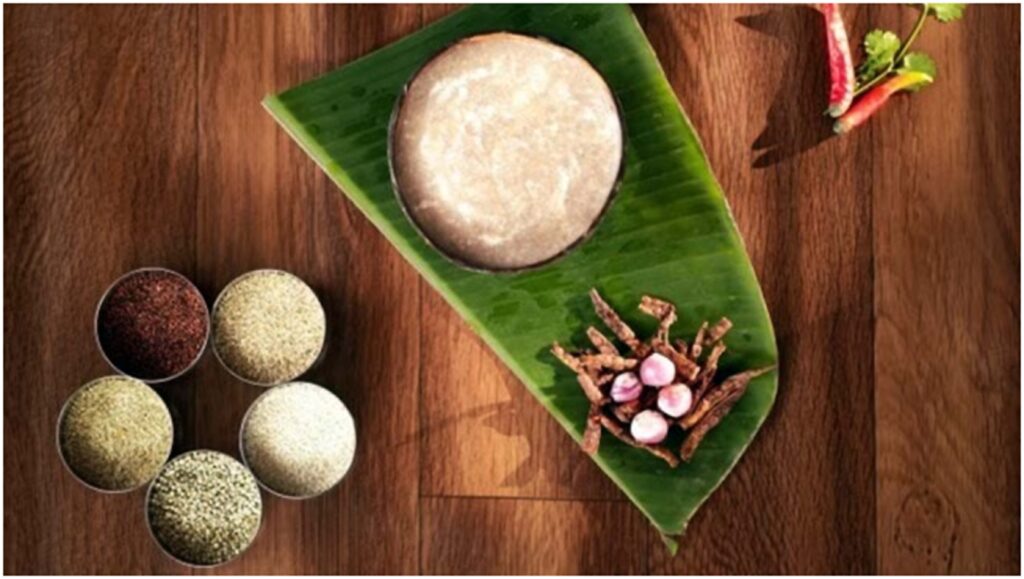
Millets cooked like rice are preferable to chapatis made of millets as they hold more moisture and are easier to eat. (File)
“Integrating different millets into the diet — instead of wheat and rice — can help in increasing food diversity. This is essential for combating the triple burden of malnutrition in India — undernutrition, overnutrition, and micronutrient deficiency. But debranning reduces food value,” she says. Her team recently published a paper in the journal Springer Nature on the impact of debranning on five Indian millets — foxtail, little, kodo, barnyard, and proso.
What happens when millets are debranned or polished?
Debranning leads to loss of minerals — iron, calcium, zinc, phosphorus, magnesium — in all five millets. “In fact, iron levels went below the level of detection in the grains in our studies,” says Dr Shanmugam. The process also led to the loss of protein content in all but two of the millets — little and barnyard millets. These are likely to contain the protein in the inner layers.
Significantly, the available carbohydrate went up across all five millets when polished by up to 11 gm per 100 gm of the millet. “We looked at the grains with electron microscopy to check which are the layers that have been removed. And, higher the degree of polish, the more starchy the grain becomes,” says Dr Shanmugam.
“While there is awareness that millets are better for your health, people might not know that these grains too can be polished. And, that the process can remove a lot of the nutrients. Yet, many polished millets make health claims that can be misleading,” she warns.
How can one tell whether the millet has been polished?
Dr Shanmugam suggests a few ways one can tell whether a grain has been polished or not:
1) Polished grains look whiter than the unpolished ones, which are dull.
2) Two, the grains should be glassy because of the oil content in the outer layers.
3) The polished grains are likely to be smoother to touch while the unpolished ones are rougher.
How can millets be integrated into our diets?
Millets cooked like rice are preferable to chapatis made of millets as they hold more moisture and are easier to eat. “If you see rice, it expands quite a bit when cooked. Around 70 per cent of the rice we eat is water; chapatis are the opposite and will have about 30 per cent water.”
Bottom of Form
She also warns against diabetics eating porridge made of millets. “When we make millet porridge, it again increases the glycemic index and can raise blood glucose levels.”
Credit: The Indian Express